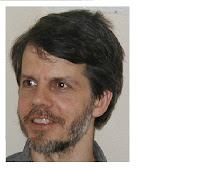
Dear Friends,
As many of you know I try to send an annual salutation on or around Ground hogs day. Events this year put off my late winter effort. Groundhogs day falls between the winter solstice and the equinox, Halloween is also between solstice & equinox so this year I’m writing at the other end of a cycle. Halloween is also celebrated as the Day of the Dead, an opportunity to connect with departed loved ones. So call this my “day of the dead letter”.
The great sadness in my family’s lives is the death of Beth’s father. He died on Groundhogs day February 2nd 2010. He had cancer 3 years ago which was removed followed by chemo, but about a year ago it came back. With the cancers return his options were more limited.
Beth’s father Mel was a doctor and teacher. He was passionate about many things in his world. He held professional achievements; he stood up on the good side of many issues. He defended the little guy. I know this because more than once when he felt that I was getting a raw deal he would express outrage on my behalf. He had a creative mind and was a life-long learner. But what really matters is the love you leave behind. Mel was loved by his patients, his students and others he touched. But none were touched so deeply as his family.
I am lucky to have Mel’s daughter as life partner. She is a pillar of strength and integrity, kindness and love, intelligence and humanness.
His Grandsons Zev and Teo each carry some of Mel’s beauty in them. Zev is thoughtful and engaged in the political issues of the world, he likes listening to NPR and he gets Mother Jones Magazine which he enjoys reading. Teo loves math and has recently completed the calculation of 13 factorial (that’s the multiplication of all the numbers from 1 to 13) Both boys are interested in the unanswered questions of the universe. For instance Teo is presently working on a project about black holes. Both boys find their own ways of creativity. Zev is writing a fantasy novel and has already written over 30 pages.
There were several others who’ve touched my life who died this past year, I’d like to honor them all, I’ll just mention one here. Liz Johnson was my beloved friend in Portland, one of the founders of Hei Wa house, we were activist together with the progressive student network and we worked together at the Soy Plant cooperative. She died of ALS this fall. A great sadness is that she was mother of a boy named Will who is about Teo’s age. She was an activist and a part of the cooperative movement; she worked in several collectives and workers cooperatives. All of my friends who have passed away lived good lives.
Reflecting on my own life and its purpose I have found some touch stones for now.
Last fall and winter I was looking at my many and eclectic engagements and interests I got insight into some key areas where I would like to focus my professional clinical studies and expertise. I am interested in the health implications of plant based nutrition. Eat your vegetables! I am intrigued by the question what can be done to promote longevity (hint: eat your vegetables.) I want to learn more about the health implications of environmental toxins as well as ways of helping individuals recover or maintain health in the face of toxic exposure (the broccoli family, cilantro, garlic & onions in particular). Finally, I have come to realize that I am passionate about addressing mental health issues by non-pharmacological means. That all said my main job involves a good bit of endocrinology and a lot of work with food allergies.
In January I identified some larger project oriented goals for my life in the coming year. I find that when I set clear goals that I am passionate about I tend to move forward in my life. They included: 1) a goal for professional productivity which I met before I had initially intended to, 2) running for the board of Ann Arbor’s food coop, and now I am on the board, 3) some specific markers regarding the building of my co-counseling, emotional support community, also essentially met. 4) Finishing the initial processing of a collection of over 5000 books which are becoming a peace library in a space carved out of my garage. These books belonged to Rich Ahern a friend of mine who died in 2004. This also is approaching conclusion. I had a grand opening in August and only have a few more books to go.
There was a fifth goal; I had wanted to build an extension on the back of our house with an eye to extreme energy efficiency. This will give us a larger bed room and it will allow Zev and Teo to each have their own bed room. In the end this goal has been postponed to next summer, something to look forward to.
Now let me offer some thoughts on my views of life and death in the wide world:
One area where I have been pleased with Barak Obama where he has gone farther than I thought a sitting president could go, is around the issue of nuclear weapons. Articulating a goal of a nuclear weapons free world, signing a treaty reducing the US nuclear stock pile by one third, reshaping our nuclear policy to promise no use or threat of use of nuclear weapons against non nuclear nations who are adherents to the nuclear non proliferation treaty, publicly disclosing the number of nuclear weapons we have. All of these are commendable major policy shifts unprecedented in the history of the nuclear era.
Reflecting on these actions around nuclear weapons I was emotionally moved. I remembered the many things I did during the 1980’s to oppose nuclear weapons. This was when both Barak Obama and I were young men, each in our own way shaping our political world view. As I marched, met, organized, protested, and resisted the arms race in any way I could muster Obama was exposed to the milieu that I was helping to create. I feel great pride in this, but I don’t say this to boast, rather to remember that small acts by many add together to create the context where change can happen, sometimes only by planting seeds for 25 years later.
Now back to remembering the dead: Americans continue to kill in Iraq, Afghanistan, Pakistan and Yemen. Estimated of the victims of the war on terror [or rather the war of terror] range from over 100 thousand to near one million. While most of those deaths were in Iraq, as many as twenty thousand may have been killed in Afghanistan. Those numbers will climb as long as the US is there. Mr. Obama must take responsibility for those killed abstractly, but killed in war and assassinated are two different crimes. Drones and kill lists brings the charge of assassination to the office of the president.
Trading the risk of nuclear destruction for the new weapons of the empire is not enough. I should like to plant seeds for real world peace,
The other death count we should start is that of climate change victims. The Pakistani flooding this summer had already claimed 2,000 lives by August. It’s counterpart the drought in Russia is now threatening a global food crisis. This is just the start. A UN report on probable human refugees from global warming suggests a magnitude of 700 million. That’s 1 in every 10 people on the planet!
What can we do? Many things. On an international day of action (October 10th) the participation Ann Arbor organization focused on front yard gardens (local food requires less CO2 for transportation, and what could be more local than your front yard.) I was fortunate to have a volunteer give me a hand digging up my front yard and over 100 gardens were made that day.
Ann Arbor is not the only place where gardens are a sign of hope. This summer the US social Forum was held in Detroit and Beth and I got a chance to learn about the greening of Detroit. For years Detroit had become almost synonymous with despair, post industrial decay, skyrocketing unemployment even before the recession, high crime rates. In Detroit devils’ night was the name for the night before Halloween which was known for its rampant arson, but from those ashes come gardens, hundreds of them on vacant land throughout the city, and among the gardener’s mutual aid and cooperation. Now the urban gardening movement throughout the country is looking to Detroit. From decay comes rebirth.
So amidst some sadness and loss I’d like to wish you hope and a happy Halloween.
Sunday, October 31, 2010

Sunday, June 14, 2009
Suplemental spending and its discontents
There is an expression that if voting could change things it would be illegal. While in little ways voting does change things, for the main foreign policy direction this slogan holds some water. While the momentum of a McCain white house might have been more belligerent in its prosecuting of war against Iraq and Afganistan, the direction would likely be the same, quagmire in Iraq and deeper in Afghanistan. While not overly surprised with the direction of the Obama Whitehouse, I am disappointed that at least we are not seeing some movement to draw down troops in Iraq.
The antiwar efforts that have been shunted into working for the Obama campaign last year, has also helped to elect several Democrats in congress and among them are many progressive Democrats who seem to be standing up against the war. The Question now is whether they will have the courage to resist the pressure coming from the administration. The word is that the Democratic party leadership is playing hardball against the Progressive Democrats demanding a vote and threatening to cut off access to the Whitehouse and to withhold support in the next election.
I wonder if the wars are becoming like abortion, a wedge issue for the Democratic party. For Republicans abortion is a heated issue for it’s conservative religious base but in spite of having control of 3 branches of government abortion is still legal. Abortion turns out the votes. Is the war the same kind of issue? Will we here in 2010 that we just need to elect a few more democrats and then they will stop the wars?
Since 2002 Democrats have been wooing the peace movement to support Democrats as the way to end the war in Iraq. This argument has worked and unfortunately probably at the cost of not enough action in the streets. Elements of the peace movement have at times acted in ways that I have felt misguided, for instance MoveOn.org people lobbying for the weaker of two pieces of legislation and in the end getting nothing. On the other hand there have been Democratic congress people who have been consistently good on the war. Their home is the Congressional Progressive Caucus of the Democratic. If ever the peace movement’s electoral strategy had a moment of truth it would be now.
It will be interesting to see if the Democrats who have opposed this supplemental spending bill will to continue to do so. We need to keep the pressure on. You can call the congressional switchboard at 202-224-3121 and then ask for your congress person and ask then to oppose the supplemental spending bill for Iraq, Afghanistan and the IMF. I don’t have much faith in voting changing things on it’s own, Voting and citizens action? Let’s see.
The antiwar efforts that have been shunted into working for the Obama campaign last year, has also helped to elect several Democrats in congress and among them are many progressive Democrats who seem to be standing up against the war. The Question now is whether they will have the courage to resist the pressure coming from the administration. The word is that the Democratic party leadership is playing hardball against the Progressive Democrats demanding a vote and threatening to cut off access to the Whitehouse and to withhold support in the next election.
I wonder if the wars are becoming like abortion, a wedge issue for the Democratic party. For Republicans abortion is a heated issue for it’s conservative religious base but in spite of having control of 3 branches of government abortion is still legal. Abortion turns out the votes. Is the war the same kind of issue? Will we here in 2010 that we just need to elect a few more democrats and then they will stop the wars?
Since 2002 Democrats have been wooing the peace movement to support Democrats as the way to end the war in Iraq. This argument has worked and unfortunately probably at the cost of not enough action in the streets. Elements of the peace movement have at times acted in ways that I have felt misguided, for instance MoveOn.org people lobbying for the weaker of two pieces of legislation and in the end getting nothing. On the other hand there have been Democratic congress people who have been consistently good on the war. Their home is the Congressional Progressive Caucus of the Democratic. If ever the peace movement’s electoral strategy had a moment of truth it would be now.
It will be interesting to see if the Democrats who have opposed this supplemental spending bill will to continue to do so. We need to keep the pressure on. You can call the congressional switchboard at 202-224-3121 and then ask for your congress person and ask then to oppose the supplemental spending bill for Iraq, Afghanistan and the IMF. I don’t have much faith in voting changing things on it’s own, Voting and citizens action? Let’s see.
Sunday, May 3, 2009
Buckminster Fuller 30 years ago and the search for vision today
I was going to try to post my thoughts on Obama’s first 100 days but last night talking with my friend Joel I noticed that I needed more vision in my life, more of the utopian calling for another world , a better world, but one that lives dormant in the potential of this world. So vision takes precedence over the president.
2 days a go I pulled the book, Synergetics 2 by Buckminster Fuller, from the Ahern Library, a collection of books residing in our garage formerly belonging to my friend Rich Ahern (now deceased). I pulled it from the shelf to practice bibliomancy, the art of randomly opening a book and reading what is there as an answer to your question. This I was doing as a party game.
Today I came to the book more seriously and read the opening section. This section was heavily underlined by my friend Rich and at the end he had written “the most potent 8 pages of modern times May 1 1981” It addresses the material needs of humans and the potential to meet them. For my part I found it interesting enough to quote here at length. Remember it reading visionary work the key is not to pick apart minutia but to let it inspire
“Now in the 1970s we can state an indisputable proposition of abundance of which the world power structure do not yet have dawning awareness. We can state that as a consequence of the myriad of more-with-less, invisible, technological advances of the 20th century, and employing only well-proven technologies and already mined and even more copiously recirculation materials, it is now technically feasible to retool and redirect world industry in such a manner that within 10 years we can have all of humanity enjoying a sustainable higher standard of living—with vastly increased degrees of freedom—than has ever been enjoyed by anyone in all history.
During this 10-year period we can also phase out all further use of fossil fuels and atomic energy, since the retooled world industry and individual energy need will have become completely supplied by our combined harvests of electromagnetic, photosynthetic, chemical and biological products of daily energy income initially produced by Sun and gravity. Industry, retooled from weapons production to livingry production will rehouse the developed phases of world-humans by single-humans by single family, air-deliverable, energy-harvesting, only-rentable dwelling machines. When humans are convergent, they will dwell in domed-over, moon-crater cities that will be energy-harvesting and –exporting centers rather than energy sinkholes.
All the foregoing makes it possible to say that since we now know that there is a sustainable abundance of life support and accommodation for all, it follows that all politics and warring are obsolete and invalid. We no longer need to rationalize selfishness. No one need ever again “earn a living.” Further living for all humanity is all cosmically prepaid.
Why don’t we exercise our epochal option? Governments are financed through taxation and would have no way of putting meters between the people and their directly received individual cosmic incomes. So too private enterprise should no more meter the energy than it meters the air. But all of Earthians’ present power structures—political, religious, or capitalist—would find their interests disastrously threatened by total human success. They are founded upon the assumption of scarcity: they are organized for and sustained by the problems imposed by the assumption of fundamental inadequacies of life support.
Why does not the public itself demand realization of its option for a revolution by design science? Less than one percent of humanity now knows that the option exists; 99 percent of humanity cannot understand the mathematical language of science. The people who make up that 99 percent do not know that science has ever found out is that the Universe consists of the most reliable technology. They think of technology as something new; they regard it as threatening both in terms of modern weaponry and as job-eliminating competition for their life sustaining opportunity to “earn a living.” Ergo, humanity thinks it is against technology and thinks itself averse to exercising its option
The fact that 99 percent of humanity does not understand nature is the prime reason for humanity’s failure to exercise its option to attain universally sustainable physical success on this planet. The prime barrier to humanity’s discovery and comprehension of nature is the obscurity of the mathematical language of science. Fortunately, however, nature is not using the strictly imaginary, awkward, and unrealistic coordinate system adopted by and taught by present-day academic science.”
and later
“At present 99 percent of humanity is misinformed in believing in the Malthusian concept of the fundamental inadequacy of life-support, and so they misuse their minds to develop only personal and partisan advantages, intellectual cunning, and selfishness. Intellectual cunning has concentrated on how to divorce money from true life-support wealth: second, cunning has learned how to make money with money by making it scares. As of the 1970’s muscle, guns, and intellectual cunning are ruling the world affairs and keeping then competitive by continuing the false premise of universal inadequacy of life support. If mind comes into supreme power with in the decade, humanity will exercise its option of design revolution and will enter a new and lasting epoch of physical success for all. If not it will be curtains for all humanity within this century.”
If there was truth in this statement it looks only more accurate today. Even with a population that has doubled since the 1970’s and threats of global warning and shrinking of fossil resources I think we have the potential in the next few years to pull this plane called humanity out of a nose dive.
I think that an understanding that all humans can get their needs met with the resources and technology at had is reassuring.
I don’t think that the problems we face are primarily material or technological, but I do think that addressing the question of material conditions is interrelated with the solution to perhaps more significant social issues. It is not sufficient to make food enough for everyone, distributing it is also essential. Buckminester Fuller understands this, but does not fully address it. Rich also saw this shortcoming, a 3 by 5 note-card that he left in this section of the book says,
“The unstated assumption here is that the only cause of war is scarcity of materials of natural resources, so that abundance will change all that; but are not fear of strangers and power-hunger/(thirst for power and immortality) and a sense of manifest destiny equally powerful reasons for war? If so then political solutions must still be found, to problems of sharing the knowledge and wealth with all peoples & religions answers must be sought for the problem of immortality.”
I don’t know exactly what Rich means by immortality but I do think that socialisms best hope rests on the fostering of human closeness, a closeness that does not rest on physical proximity, fondness. Call it solidarity if you wish, when humans see in others the worth and goodness that is naturally within each of us, we have the capacity to overcome what Buckminister Fuller calls the misuse of “minds to develop only personal and partisan advantages”
2 days a go I pulled the book, Synergetics 2 by Buckminster Fuller, from the Ahern Library, a collection of books residing in our garage formerly belonging to my friend Rich Ahern (now deceased). I pulled it from the shelf to practice bibliomancy, the art of randomly opening a book and reading what is there as an answer to your question. This I was doing as a party game.
Today I came to the book more seriously and read the opening section. This section was heavily underlined by my friend Rich and at the end he had written “the most potent 8 pages of modern times May 1 1981” It addresses the material needs of humans and the potential to meet them. For my part I found it interesting enough to quote here at length. Remember it reading visionary work the key is not to pick apart minutia but to let it inspire
“Now in the 1970s we can state an indisputable proposition of abundance of which the world power structure do not yet have dawning awareness. We can state that as a consequence of the myriad of more-with-less, invisible, technological advances of the 20th century, and employing only well-proven technologies and already mined and even more copiously recirculation materials, it is now technically feasible to retool and redirect world industry in such a manner that within 10 years we can have all of humanity enjoying a sustainable higher standard of living—with vastly increased degrees of freedom—than has ever been enjoyed by anyone in all history.
During this 10-year period we can also phase out all further use of fossil fuels and atomic energy, since the retooled world industry and individual energy need will have become completely supplied by our combined harvests of electromagnetic, photosynthetic, chemical and biological products of daily energy income initially produced by Sun and gravity. Industry, retooled from weapons production to livingry production will rehouse the developed phases of world-humans by single-humans by single family, air-deliverable, energy-harvesting, only-rentable dwelling machines. When humans are convergent, they will dwell in domed-over, moon-crater cities that will be energy-harvesting and –exporting centers rather than energy sinkholes.
All the foregoing makes it possible to say that since we now know that there is a sustainable abundance of life support and accommodation for all, it follows that all politics and warring are obsolete and invalid. We no longer need to rationalize selfishness. No one need ever again “earn a living.” Further living for all humanity is all cosmically prepaid.
Why don’t we exercise our epochal option? Governments are financed through taxation and would have no way of putting meters between the people and their directly received individual cosmic incomes. So too private enterprise should no more meter the energy than it meters the air. But all of Earthians’ present power structures—political, religious, or capitalist—would find their interests disastrously threatened by total human success. They are founded upon the assumption of scarcity: they are organized for and sustained by the problems imposed by the assumption of fundamental inadequacies of life support.
Why does not the public itself demand realization of its option for a revolution by design science? Less than one percent of humanity now knows that the option exists; 99 percent of humanity cannot understand the mathematical language of science. The people who make up that 99 percent do not know that science has ever found out is that the Universe consists of the most reliable technology. They think of technology as something new; they regard it as threatening both in terms of modern weaponry and as job-eliminating competition for their life sustaining opportunity to “earn a living.” Ergo, humanity thinks it is against technology and thinks itself averse to exercising its option
The fact that 99 percent of humanity does not understand nature is the prime reason for humanity’s failure to exercise its option to attain universally sustainable physical success on this planet. The prime barrier to humanity’s discovery and comprehension of nature is the obscurity of the mathematical language of science. Fortunately, however, nature is not using the strictly imaginary, awkward, and unrealistic coordinate system adopted by and taught by present-day academic science.”
and later
“At present 99 percent of humanity is misinformed in believing in the Malthusian concept of the fundamental inadequacy of life-support, and so they misuse their minds to develop only personal and partisan advantages, intellectual cunning, and selfishness. Intellectual cunning has concentrated on how to divorce money from true life-support wealth: second, cunning has learned how to make money with money by making it scares. As of the 1970’s muscle, guns, and intellectual cunning are ruling the world affairs and keeping then competitive by continuing the false premise of universal inadequacy of life support. If mind comes into supreme power with in the decade, humanity will exercise its option of design revolution and will enter a new and lasting epoch of physical success for all. If not it will be curtains for all humanity within this century.”
If there was truth in this statement it looks only more accurate today. Even with a population that has doubled since the 1970’s and threats of global warning and shrinking of fossil resources I think we have the potential in the next few years to pull this plane called humanity out of a nose dive.
I think that an understanding that all humans can get their needs met with the resources and technology at had is reassuring.
I don’t think that the problems we face are primarily material or technological, but I do think that addressing the question of material conditions is interrelated with the solution to perhaps more significant social issues. It is not sufficient to make food enough for everyone, distributing it is also essential. Buckminester Fuller understands this, but does not fully address it. Rich also saw this shortcoming, a 3 by 5 note-card that he left in this section of the book says,
“The unstated assumption here is that the only cause of war is scarcity of materials of natural resources, so that abundance will change all that; but are not fear of strangers and power-hunger/(thirst for power and immortality) and a sense of manifest destiny equally powerful reasons for war? If so then political solutions must still be found, to problems of sharing the knowledge and wealth with all peoples & religions answers must be sought for the problem of immortality.”
I don’t know exactly what Rich means by immortality but I do think that socialisms best hope rests on the fostering of human closeness, a closeness that does not rest on physical proximity, fondness. Call it solidarity if you wish, when humans see in others the worth and goodness that is naturally within each of us, we have the capacity to overcome what Buckminister Fuller calls the misuse of “minds to develop only personal and partisan advantages”
Sunday, April 19, 2009
Criminal Justice and American Crimes of Torture
This week Obama took the bold step of releasing legal memos from the Bush administration that advocated torture, that is physical and psychological pain as techniques of interrogation. When he released this information he also was clear that his administration would not prosecute anyone acting on the advice of these memos. And he would defend anyone prosecuted for such crimes. He is arguing that we need to go forward rather than looking backwards.
Most astute civil rights defenders are arguing that to go forward we must first address the crimes of the past. If we don't do that it is argued that a de facto precedent is set supporting the legitimacy of of these torture techniques. In light of present legal principals I would have to agree. international law is clear that acting on orders from a superior does not absolve an individual of guilt. I'm no lawyer but by my understanding, if individuals who were involved in torture are not investigated and brought to trial in the context of the American system of justice, then it seems that the US is condoning their actions.
Now we get to the question of the American judicial system. There are 3 arguments in favor of incarceration, Punishment for punishment sake, Punishment as deterrent, and protection and prevention. Punishment for punishment sake is of course the mind set of the torturer, we don't want to recapitulate that mentality. The general evidence from criminal justice research is that deterrence does not happen. This is true for run of the mill criminals, maybe for those involved in crimes of the state deterrence works better. I'm open to that possibility , but I don't think we have evidence to support that. Finally prevention stands as the only potential legitimate rational for incarceration. Certainly we saw many of the political criminals of the Iran Contra scandal reemerge in the second Bush administration. Perhaps the world would have been safer if they'd been thrown in jail for life. Since a president might pardon anyone convicted of torture incarceration does not guaranty prevention from future crimes.
There are two other approaches to justice, rehabilitation, and restorative justice. Certainly a clear articulation from the present administration can do much to rehabilitate those who were acting on the Bush administration memos. Their crime was the torture techniques, but they were following orders, something we assume they will continue to do. Finally this brings us to restorative justice, in restorative justice the parties involved work together to identify ways that justice can be restored. Restorative justice at the political level might follow the model from South Africa's Truth and Reconciliation Commission.
Of those approaches and options regarding justice I suppose I favor truth and reconciliation. But if Obama wants to focus on the future and forget past acts, perhaps this principal can be applied to the vast number of people now behind bars. Nowhere does this make more sense than for the thousands incarcerated for non-violent drug crimes. For my part I'd like to see it applied to my friend who was recently sentenced to 22 years for acts of eco-sabotage done nearly 10 years ago.
What ever I think or Obama thinks, the responsibility of perusing and prosecuting the Bush approved torture rests with Eric Holder. Mr Holder is obliged to act regardless of what president Obama wants. Time will tell if he does.
Most astute civil rights defenders are arguing that to go forward we must first address the crimes of the past. If we don't do that it is argued that a de facto precedent is set supporting the legitimacy of of these torture techniques. In light of present legal principals I would have to agree. international law is clear that acting on orders from a superior does not absolve an individual of guilt. I'm no lawyer but by my understanding, if individuals who were involved in torture are not investigated and brought to trial in the context of the American system of justice, then it seems that the US is condoning their actions.
Now we get to the question of the American judicial system. There are 3 arguments in favor of incarceration, Punishment for punishment sake, Punishment as deterrent, and protection and prevention. Punishment for punishment sake is of course the mind set of the torturer, we don't want to recapitulate that mentality. The general evidence from criminal justice research is that deterrence does not happen. This is true for run of the mill criminals, maybe for those involved in crimes of the state deterrence works better. I'm open to that possibility , but I don't think we have evidence to support that. Finally prevention stands as the only potential legitimate rational for incarceration. Certainly we saw many of the political criminals of the Iran Contra scandal reemerge in the second Bush administration. Perhaps the world would have been safer if they'd been thrown in jail for life. Since a president might pardon anyone convicted of torture incarceration does not guaranty prevention from future crimes.
There are two other approaches to justice, rehabilitation, and restorative justice. Certainly a clear articulation from the present administration can do much to rehabilitate those who were acting on the Bush administration memos. Their crime was the torture techniques, but they were following orders, something we assume they will continue to do. Finally this brings us to restorative justice, in restorative justice the parties involved work together to identify ways that justice can be restored. Restorative justice at the political level might follow the model from South Africa's Truth and Reconciliation Commission.
Of those approaches and options regarding justice I suppose I favor truth and reconciliation. But if Obama wants to focus on the future and forget past acts, perhaps this principal can be applied to the vast number of people now behind bars. Nowhere does this make more sense than for the thousands incarcerated for non-violent drug crimes. For my part I'd like to see it applied to my friend who was recently sentenced to 22 years for acts of eco-sabotage done nearly 10 years ago.
What ever I think or Obama thinks, the responsibility of perusing and prosecuting the Bush approved torture rests with Eric Holder. Mr Holder is obliged to act regardless of what president Obama wants. Time will tell if he does.
Tuesday, April 14, 2009
Supporting the Obama Agenda in questioning recent Obama administration actions.
Let’s assume that presidential candidate Obama was sincere when he spoke out against the violations of habious corpus at Guantanamo and rendition of individuals to secret prisons. Obama has also been outspoken in favor of transparency. Obama’s agenda represents the political refutation of the excesses of the Bush administration.
I’m glad that President Obama has issued orders to close the Guantanamo prison and the secret, so called black sites. Obama has taken action on transparency for instance issuing orders that FOI request be responded to with as little information withheld as possible.
Recently some positions taken by the Obama administration seem to go against habious corpus and transparency. First is the issue of the Bagram prison in Afganistan. Apparently the administration is now arguing that prisoners can be taken from other countries to Bagram, and be kept there indefinitely without due process. This is a continuation of the Bush Administrations position. A judge has ruled that the same rules that apply to Guantanamo apply to Bagram. Another point of concern is the Obama Department of Justice invoking state secrets and even creating a new term “sovereign immunity” in a case of illegal spying from the Bush Administration. Sovereign immunity virtually dismantles judicial checks on spying from the executive branch. The State Secrets Protection Act, legislation originally written by Clinton and Biden in response to Bush’s evoking of state secrets, has been reintroduced by Senators Russ Feingold, Ted Kennedy, and Pat Leahy.
No doubt the Obama agenda as articulated during his campaign is being challenged by the politics of the office of the presidency. I would like to have a greater insight into the pressures that push the administration away from the agenda. In the meantime supporting the State Secrets Protection Act is something we can do to support the original Obama agenda.
I’m glad that President Obama has issued orders to close the Guantanamo prison and the secret, so called black sites. Obama has taken action on transparency for instance issuing orders that FOI request be responded to with as little information withheld as possible.
Recently some positions taken by the Obama administration seem to go against habious corpus and transparency. First is the issue of the Bagram prison in Afganistan. Apparently the administration is now arguing that prisoners can be taken from other countries to Bagram, and be kept there indefinitely without due process. This is a continuation of the Bush Administrations position. A judge has ruled that the same rules that apply to Guantanamo apply to Bagram. Another point of concern is the Obama Department of Justice invoking state secrets and even creating a new term “sovereign immunity” in a case of illegal spying from the Bush Administration. Sovereign immunity virtually dismantles judicial checks on spying from the executive branch. The State Secrets Protection Act, legislation originally written by Clinton and Biden in response to Bush’s evoking of state secrets, has been reintroduced by Senators Russ Feingold, Ted Kennedy, and Pat Leahy.
No doubt the Obama agenda as articulated during his campaign is being challenged by the politics of the office of the presidency. I would like to have a greater insight into the pressures that push the administration away from the agenda. In the meantime supporting the State Secrets Protection Act is something we can do to support the original Obama agenda.
Saturday, April 4, 2009
Words I never thought I'd hear
"We can't reduce the threat of a nuclear weapon going off unless those that possess the most nuclear weapons, the United States and Russia, take serious steps to reduce our stockpiles," These are words I never thought I'd hear from a sitting American President. Sure I never thought I'd see a non-white president, but lets judge people by the content of their character not the color of their skin. Yes, I still oppose Obama's troop build up in Afghanistan. One has to take into account that this speech was really aimed at mobilizing world leaders against North Korea. And any politicians words are only as good as the actions they translate into. But even if he wasn't serious about cutting nuclear arms by one third in the next year and eventually eliminating all nuclear weapons, the notion that we would not have a double standard regarding nuclear weapons and military threat is unimaginable up to now in US foreign policy.
I think that we in the peace movement should have a celebration over this initiative.
I think that we in the peace movement should have a celebration over this initiative.
Tuesday, March 31, 2009
universal coverage vs public health
Universal medical coverage and comprehensive public health are not at odds. Each should further the goals of the other. But in thinking about policy that moves our society towards a more healthy citizenry looking at each of these goals as separate and even contrasting them may be helpful in getting direction. The tendency of the liberal left is to focus on universal coverage. I would concur that the value of society caring for all of its members is paramount. But the failure to provide comprehensive and unbiased public health education and interventions may have a greater impact on people’s health than universal access to primary, tertiary and pharmaceutical care. This post is meant as an exploration of this question, not an answer.
Public health includes many foci: Education for self care which includes information on lifestyle choices that promote decreased morbidity and increased longevity, and information on the prevention of the spread of infectious diseases. Interventions to promote a healthy environment, this includes promotion of sanitation, creation of healthy options and actions to address toxic hazards. Management of communicable infectious diseases, this can involve health screening, immunization and treatment.
Universal coverage generally includes expansion of medical coverage to everyone. While at the present virtually anyone can legally walk into an ER and be treated, this is very limited care, and even this many people avoid for fear of the bill or quality of care. Primary care is regular access to a clinician or clinic where a medical overview can be kept, sometimes called a medical home, or your regular doctor. Tertiary care includes advanced hospital care and medical procedures. Finally many don’t have access to needed pharmaceuticals. These are the major challenges of universal coverage.
Early public health problems included problems of sanitation and control of infectious disease. The role of sanitation probably has more to do with improved health statistics than any amount of medical care. World wide this is still a major problem. In the US it has generally been addressed with exceptions largely related to poverty, aging infrastructure and privatization of water systems. Successful elimination of small pox is perhaps the greatest single disease focused public health success stories. We are now only a few hundred cases away from the eradication of Polio from the planet in the same way. With greater acknowledgment of the problem and public health efforts to contain it, the HIV virus might have never spread as broadly as it has.
The major health problems facing the US today are largely chronic diseases. These diseases are rooted in problems of the dominant contemporary lifestyle. This lifestyle includes lack of physical activity, excessive and inadequate nutrition, high levels of psychological stress, and exposure to environmental poisons. Physical exercise is naturally reduced by convenience devices, not the least of which is the personal automobile, but there are ways of promoting exercise that don’t involve eliminating the car. Much could be said about the nutritious roots of chronic disease. Beyond admonishments to eat your vegetables, Americans suffer from a excess of unhealthy fats and sugar, and inadequate amounts of many essential nutrients. Most people don’t realize that the stress in their lives has costs beyond its psychological impact. Stress contributes to the metabolism that leads to obesity and the many chronic diseases that are related to it. Finally we don’t know nor can we adequately measure the effects of the thousands of new chemicals that are released into our environment every year.
Lets look at the central chronic disease complex that faces adult Americas today. At the pinnacle is heart disease, cardiovascular disease is the number one cause of death in America. But Obesity and Diabetes rates are on the rise. 1/3 of Americans meet the criteria of Obesity and it is estimated on current trends that 1/3 of children born today will have diabetes in their lifetime. In 2005 the New Engalnd journal of medicine published an article indicating that although the life span for humans had consistently increased for 200 years, we are now facing a likely decrease in life expectancy. The rational for this conclusion was the rise in obesity and diabetes. Diabetes contributes to the risk of heart disease, obesity contributes to the risk of diabetes and heart disease. Together risk markers for these three medical conditions make up what is called metabolic syndrome. The likely contributing factors for metabolic syndrome include: Consumption of a diet rich in simple sugars, or what is often called glycemic load. Trans fats, artificially hardened oils that are not found in nature. Excess and unhealthy dietary fat, and unbalanced ratios of healthy fats such as the omega 3 fatty acids. Not eating enough vegetables, or a lack of adequate and diverse phytonutriants. Insufficient cardiovascular exercise. Lack of strength building exercises. Smoking and consumption of other drugs that have significant cardiovascular effects. Exposure to environmental toxins including heavy metals and zenobiotic. Stress also plays a role in the development of Metabolic syndrome.
Clinical interventions regarding these risk factors might include some brief education, a hand out, and occasional referral to further educational or behavioral change programs. In reality even the briefest education is skipped over in most clinical visits. Public health interventions could address any of these contributing factors in a wide variety of ways. I will give several example of potential public health interventions that could improve Americas nutritional habits as they relate to metabolic syndrome. This is not intended as a proposal or an endorsement, but as evidence of the power of public health interventions. Any public health intervention merits careful consideration regarding its full effects, its costs, risks and adverse consequences as well as its potential benefits.. Nonetheless many of the examples I give have been used to reduce tobacco smoking. And some are being tried regarding food.
Public education regarding healthy nutrition, such as a national add campaign, limitations on the advertising of unhealthy foods fast food chains restricted from advertising on television, or require labeling of foods with information about their health risks or benefits, food labels do have quite a bit of information but for instance information about glycemic index and glycemic load could be helpful in identifying healthier carbohydrates. Taxing or preventing the sale of food substances or additives, new york city for instance has moved to stop the sale of trans fats within the city, mandating a variety of food options in a given area, one city in California has placed limits on the number of fast food places that can operate in a specific community. Promote research to further develop our understanding the role of improper nutrition in the development of metabolic syndrome. Cut subsides to corn which is a subsidy to high fructose corn syrup and to the cattle industry. Instead, subsidies the growth of garden vegetables. If the USDA is correct that a significant number of Americans diets are deficient of several essentials nutrients including vitamins A, C and B complex, calcium, magnesium, iron, and zinc to name a few, providing discounted or even free multi vitamins might have major heath benefits. Establish national broccoli day. The possible public health actions one might imagine are unlimited.
Public health interventions are of course limited by corporate political pressure. For instance, a recent major study published in the Archives of Internal Medicine found that red meat consumption associated with increased mortality. It is unlikely that that the cattle industry will let this information work its way into America’s public health policy
Nonetheless, my premise is that public health measures are better for providing preventive medical care, universal coverage provides improved quality of disease management and care. When thinking about individuals and their health and suffering I think that prevention may be more important than disease management.
Let me offer two scenarios: In the first case there is universal coverage, everyone gets insurance as good as those in congress have, but chronic disease rates continue to clime. The second scenario involves public health measures that result in substantial reduction in chronic disease rates but coverage continues at it’s present levels. Lets look at these scenarios in terms of mortality and morbidity, morbidity being a measure of ongoing physical disability and suffering. Scenario one might result in a shorter life expectancy for many, perhaps some who had not been insured but had become insured might live longer than they would have. But if the JAMA article is correct chronic disease would likely overwhelm those gains. In scenario two we might see people on the whole living longer although those with out insurance would not get care that might help them to live longer in certain circumstances. Disability and suffering is much the same. Chronic disease brings with it morbidity, health care can mitigate but not eliminate morbidity. Public health can not make all disease go away and those with out full access to medical care suffer more. One might think of it as a trade off suffering of those who don’t have insurance or suffering of those who will get a preventable chronic illness. I think it is possible that life expectancy would be longer and more suffering would be eliminated by instituting reasonable measures to reduce preventable chronic diseases than by providing universal access.
From a strictly utilitarian standpoint public health may win out. But principal of fairness and equality also need to be considered. At first glance it may be the working poor who suffer most if coverage is not extended to all, but the burden of chronic disease is not spread evenly, it too has a class bias against the poor. One might think that this is just due to coverage but we see the same pattern in countries with universal health coverage.
There are serious issues related to the government taking a heavy hand in directing lifestyle choices, particularly when the government so often represents corporate interests.
Finally cost is a complex issue beyond the realm of this post.
This post is speculative, I don’t have the facts or numbers to back up a case for greater public health over universal coverage, and I hope it isn’t a choice one or the other.
Public health includes many foci: Education for self care which includes information on lifestyle choices that promote decreased morbidity and increased longevity, and information on the prevention of the spread of infectious diseases. Interventions to promote a healthy environment, this includes promotion of sanitation, creation of healthy options and actions to address toxic hazards. Management of communicable infectious diseases, this can involve health screening, immunization and treatment.
Universal coverage generally includes expansion of medical coverage to everyone. While at the present virtually anyone can legally walk into an ER and be treated, this is very limited care, and even this many people avoid for fear of the bill or quality of care. Primary care is regular access to a clinician or clinic where a medical overview can be kept, sometimes called a medical home, or your regular doctor. Tertiary care includes advanced hospital care and medical procedures. Finally many don’t have access to needed pharmaceuticals. These are the major challenges of universal coverage.
Early public health problems included problems of sanitation and control of infectious disease. The role of sanitation probably has more to do with improved health statistics than any amount of medical care. World wide this is still a major problem. In the US it has generally been addressed with exceptions largely related to poverty, aging infrastructure and privatization of water systems. Successful elimination of small pox is perhaps the greatest single disease focused public health success stories. We are now only a few hundred cases away from the eradication of Polio from the planet in the same way. With greater acknowledgment of the problem and public health efforts to contain it, the HIV virus might have never spread as broadly as it has.
The major health problems facing the US today are largely chronic diseases. These diseases are rooted in problems of the dominant contemporary lifestyle. This lifestyle includes lack of physical activity, excessive and inadequate nutrition, high levels of psychological stress, and exposure to environmental poisons. Physical exercise is naturally reduced by convenience devices, not the least of which is the personal automobile, but there are ways of promoting exercise that don’t involve eliminating the car. Much could be said about the nutritious roots of chronic disease. Beyond admonishments to eat your vegetables, Americans suffer from a excess of unhealthy fats and sugar, and inadequate amounts of many essential nutrients. Most people don’t realize that the stress in their lives has costs beyond its psychological impact. Stress contributes to the metabolism that leads to obesity and the many chronic diseases that are related to it. Finally we don’t know nor can we adequately measure the effects of the thousands of new chemicals that are released into our environment every year.
Lets look at the central chronic disease complex that faces adult Americas today. At the pinnacle is heart disease, cardiovascular disease is the number one cause of death in America. But Obesity and Diabetes rates are on the rise. 1/3 of Americans meet the criteria of Obesity and it is estimated on current trends that 1/3 of children born today will have diabetes in their lifetime. In 2005 the New Engalnd journal of medicine published an article indicating that although the life span for humans had consistently increased for 200 years, we are now facing a likely decrease in life expectancy. The rational for this conclusion was the rise in obesity and diabetes. Diabetes contributes to the risk of heart disease, obesity contributes to the risk of diabetes and heart disease. Together risk markers for these three medical conditions make up what is called metabolic syndrome. The likely contributing factors for metabolic syndrome include: Consumption of a diet rich in simple sugars, or what is often called glycemic load. Trans fats, artificially hardened oils that are not found in nature. Excess and unhealthy dietary fat, and unbalanced ratios of healthy fats such as the omega 3 fatty acids. Not eating enough vegetables, or a lack of adequate and diverse phytonutriants. Insufficient cardiovascular exercise. Lack of strength building exercises. Smoking and consumption of other drugs that have significant cardiovascular effects. Exposure to environmental toxins including heavy metals and zenobiotic. Stress also plays a role in the development of Metabolic syndrome.
Clinical interventions regarding these risk factors might include some brief education, a hand out, and occasional referral to further educational or behavioral change programs. In reality even the briefest education is skipped over in most clinical visits. Public health interventions could address any of these contributing factors in a wide variety of ways. I will give several example of potential public health interventions that could improve Americas nutritional habits as they relate to metabolic syndrome. This is not intended as a proposal or an endorsement, but as evidence of the power of public health interventions. Any public health intervention merits careful consideration regarding its full effects, its costs, risks and adverse consequences as well as its potential benefits.. Nonetheless many of the examples I give have been used to reduce tobacco smoking. And some are being tried regarding food.
Public education regarding healthy nutrition, such as a national add campaign, limitations on the advertising of unhealthy foods fast food chains restricted from advertising on television, or require labeling of foods with information about their health risks or benefits, food labels do have quite a bit of information but for instance information about glycemic index and glycemic load could be helpful in identifying healthier carbohydrates. Taxing or preventing the sale of food substances or additives, new york city for instance has moved to stop the sale of trans fats within the city, mandating a variety of food options in a given area, one city in California has placed limits on the number of fast food places that can operate in a specific community. Promote research to further develop our understanding the role of improper nutrition in the development of metabolic syndrome. Cut subsides to corn which is a subsidy to high fructose corn syrup and to the cattle industry. Instead, subsidies the growth of garden vegetables. If the USDA is correct that a significant number of Americans diets are deficient of several essentials nutrients including vitamins A, C and B complex, calcium, magnesium, iron, and zinc to name a few, providing discounted or even free multi vitamins might have major heath benefits. Establish national broccoli day. The possible public health actions one might imagine are unlimited.
Public health interventions are of course limited by corporate political pressure. For instance, a recent major study published in the Archives of Internal Medicine found that red meat consumption associated with increased mortality. It is unlikely that that the cattle industry will let this information work its way into America’s public health policy
Nonetheless, my premise is that public health measures are better for providing preventive medical care, universal coverage provides improved quality of disease management and care. When thinking about individuals and their health and suffering I think that prevention may be more important than disease management.
Let me offer two scenarios: In the first case there is universal coverage, everyone gets insurance as good as those in congress have, but chronic disease rates continue to clime. The second scenario involves public health measures that result in substantial reduction in chronic disease rates but coverage continues at it’s present levels. Lets look at these scenarios in terms of mortality and morbidity, morbidity being a measure of ongoing physical disability and suffering. Scenario one might result in a shorter life expectancy for many, perhaps some who had not been insured but had become insured might live longer than they would have. But if the JAMA article is correct chronic disease would likely overwhelm those gains. In scenario two we might see people on the whole living longer although those with out insurance would not get care that might help them to live longer in certain circumstances. Disability and suffering is much the same. Chronic disease brings with it morbidity, health care can mitigate but not eliminate morbidity. Public health can not make all disease go away and those with out full access to medical care suffer more. One might think of it as a trade off suffering of those who don’t have insurance or suffering of those who will get a preventable chronic illness. I think it is possible that life expectancy would be longer and more suffering would be eliminated by instituting reasonable measures to reduce preventable chronic diseases than by providing universal access.
From a strictly utilitarian standpoint public health may win out. But principal of fairness and equality also need to be considered. At first glance it may be the working poor who suffer most if coverage is not extended to all, but the burden of chronic disease is not spread evenly, it too has a class bias against the poor. One might think that this is just due to coverage but we see the same pattern in countries with universal health coverage.
There are serious issues related to the government taking a heavy hand in directing lifestyle choices, particularly when the government so often represents corporate interests.
Finally cost is a complex issue beyond the realm of this post.
This post is speculative, I don’t have the facts or numbers to back up a case for greater public health over universal coverage, and I hope it isn’t a choice one or the other.
Subscribe to:
Posts (Atom)